Four ordinary rooms
Living it.
The seven laws do not descend into the world at the level of civilisation. Civilisation is where they get counted. They descend at the level of a table, a scale, a door and a neighbour, and the specific hour in which keeping them costs something.

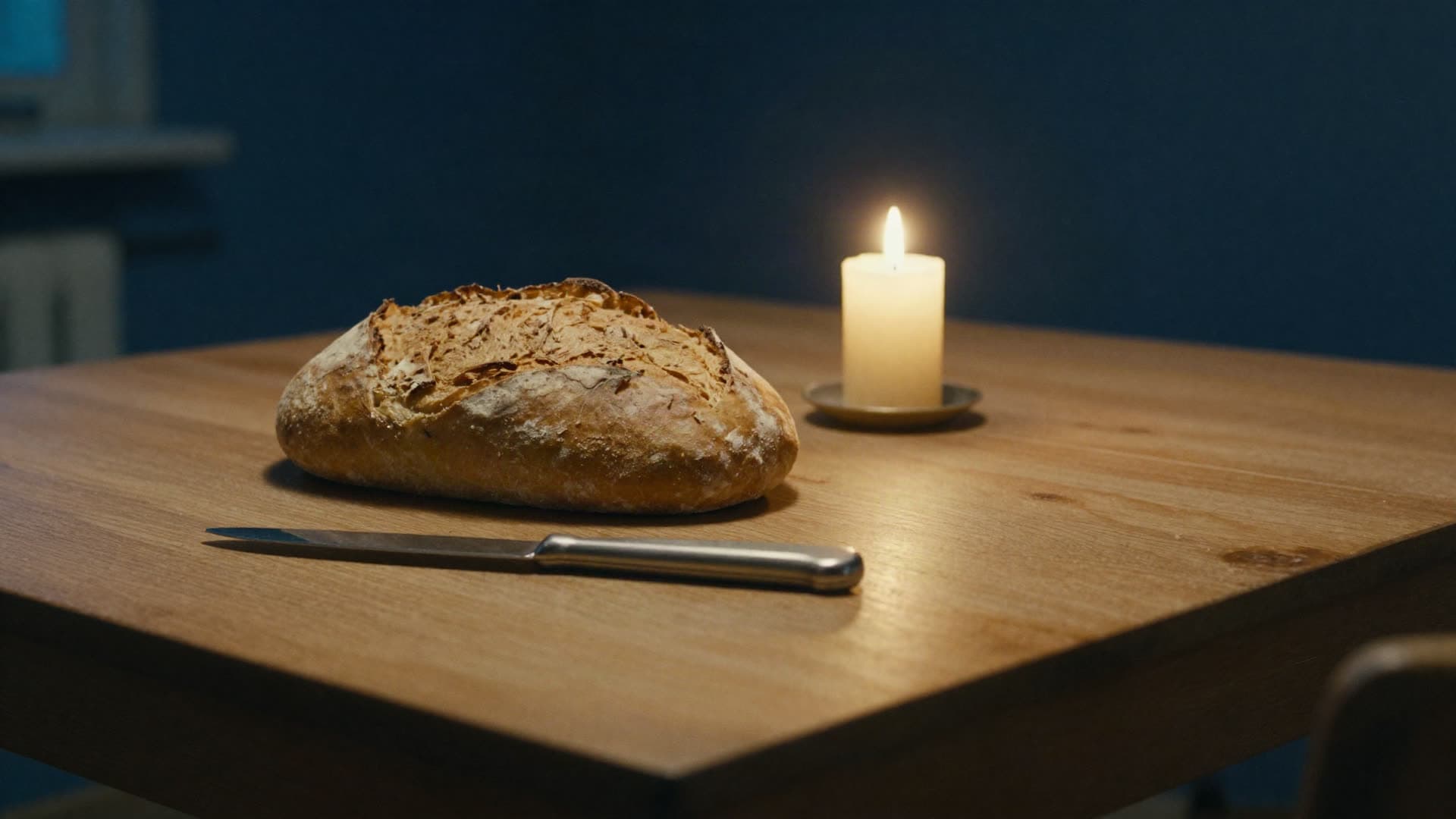
Scene 1
At a table
You are hungry and the food is in front of you. Nothing about this moment is spiritual, and that is exactly the point: the tradition puts one of only seven laws for all of humanity right here, at the place where a person most nearly resembles an animal.
The law itself is met by an ordinary food supply. What remains yours is the pause. One breath, in which the food is something permitted to you rather than something merely available.
The Talmud takes it further and says that one who benefits from this world without a blessing is as one who steals. From whom? From the Owner, whose permission is the only reason the fruit was ever in your hand.

Scene 2
In a market
This is where the fifth law lives, and it does not live in the dramatic case. It lives in a weight, an invoice, an hour billed, a material specified and then quietly substituted.
The Rambam's ruling reaches an amount too small for a court to bother with, and that is the whole design. The law is not a threshold that you cross. It is a boundary that does not move with the size of the sum.
Ask the question the tradition asks: is the scale accurate on the day nobody would know. That day is the one the law was written for.

Scene 3
At a doorway
A household is the smallest structure everything else rests on, and it is the one a child does not choose. The fourth law stands in front of it.
In practice this is kept in unremarkable hours rather than dramatic ones: an apology not postponed a further week, a promise kept to somebody small, an evening where the phone is in another room.
The Sages, wanting to show what honouring a parent looks like when it is complete, told the story of a man in Ashkelon who lost an enormous profit rather than wake his father to take a key from beneath his pillow. They did not need that story. They chose it.
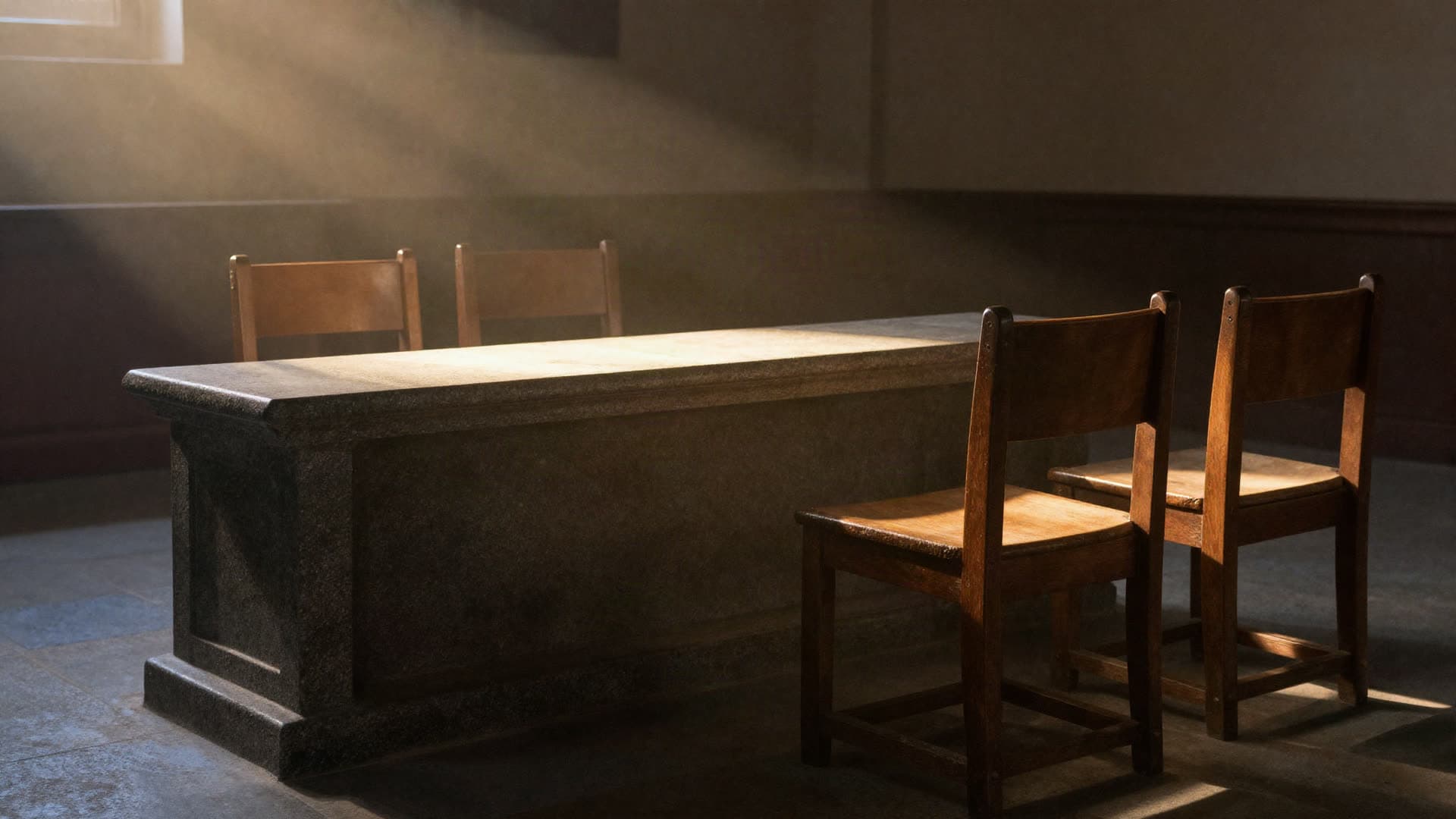
Scene 4
In a courtroom
Most readers of this page will never sit on a bench. Almost every reader of this page decides something: between two employees, two children, two accounts of the same evening.
The Talmud says a judge who gives a true judgment becomes a partner with G-d in the work of creation. It does not say a famous judgment. The matter can be trivial to everyone except the two people in front of you.
The version of this in your hands is small and difficult: go and get the second account in full, before you act, in a disagreement where you have already decided who is right.
One act, and the whole scale
The Rambam rules that a person should see themselves and the entire world as evenly balanced, half merit and half otherwise, and that if they perform a single commandment they have tipped themselves and the whole world to the side of merit.
Not the Jewish world. The world. He is not writing poetry in that ruling. He is writing law, and law is written about things that actually happen.
So: one thing, this week. Each of the seven pages ends with a single concrete action, deliberately small, deliberately not a programme. Pick one.